I am a Film-Maker and Shark enthusiast who spends a lot of time talking about Shark Attacks, Shark Behaviour and Shark Feeding.
I am responsible for the films Of Shark and Man, A Ray of Light and A Ray of Light II.
I don't believe in appealing to the lowest common denominator.
www.ofsharkandman.com
Its been a while since the last blog, I had three weeks in Mallorca then came back to a mountain of things needing to be put in place so I could crack on again with Of Shark and Man and as I am now at that point, I felt an update was long overdue but first...
That video all over Facebook of the dude jumping into the harbour in Manly, it's a fake, a very clever and creative one but a fake nonetheless. The big cut is not the one at 59secs, it's the one at 38secs, it's been uploaded at 480p almost certainly to hide the cuts, the water in which we see the shark is clearly open ocean, not least because the shark is accompanied by pelagic fish species which would not be found in a harbour environment and also, the main source of the video initially was SourceFeed, which is a "Discovery Channel Digital Network" and what do we have just around the corner? Yep it wouldn't surprise me if this was another (admittedly brilliant) viral by Discovery who are quickly becoming the masters of this type of advertising. Shout out as well to the editor, a very skillful piece of cutting!
Okay, on to more pressing and very real matters!
Where is progress with "Of Shark and Man" at the moment?
The other night, the final section of the voice over went into the edit which is a major step towards completion of the first cut. Basically, the whole thing was cut together to a "rhythm" I had in mind which I felt would work best, the script for the voice over was then finalised and slight changes made to the edit so it all fit together as closely as possible. A couple of weeks ago I went to the Banter Media studios to record the voice over with Adam Steel who was brilliant, the whole thing was done in about five hours and sounds absolutely superb and that's without any eq'ing being done yet.
Bad sound will kill your film, it doesn't matter how great it looks, sucky sound screams out "I'm an amateur" and you lose your audience so the voice over for this film has to sound good and I'm very confident it does. I won't lie though, I'm not a fan of recording them, I certainly don't speak "Queen's English" (I detest that term) and I swear a lot so ensuring people like Americans can actually understand what I'm saying whilst also sounding like me is easier said than done. It's accurate to say the end result sounds like I'm meeting a new girlfriend's mum for the first time and I can live with that.
Recording the Voiceover
Putting the voice over into the edit has really helped as it has streamlined everything and also highlighted where any changes needed to be made, all of which have been done so as of tonight, the process of sending everything off to David Lawrie will begin so he can complete the sound design.
Sound Design has already started and sounds amazing, David and I have been in regular contact where I have been explaining exactly what I want. It is very complex and ridiculously ambitious but then, hasn't this project always been this way? As I said to David the other day, everything these days is so safe and derivative, let's do something completely different, we're not just making "another shark film."
The intro title sequence is currently under construction as well and I am really excited to see what Dave Whittle has done with it, the guy is one of the best graphics guys out there in the UK right now and I am beyond stoked to have him be a part of this film!
The process of sound tracking the film is in it's early stages but will pick up momentum likely next week so currently, we have the final sound design to be completed, the title sequence to finish, the music and next week the colour correction and grading will begin. In short, we are very very close to a finished first cut!
As I have enlisted the help of external experts, I obviously have to wait until they have done what they need to do and at no point will I be rushing them but I would like to say a first cut will be finished and ready for industry screenings by the end of August, start of September and that is allowing plenty of time for the soundtrack to be completed.
So, when each section has gone to David Lawrie and every single clip of audio split into its own track (the most mind numbingly tedious thing ever) the grade will start, whilst at the same time music is being composed and recorded and the title sequence finished... We're almost there folks!
Sorry for the radio silence once again, I'll try to find time for more regular updates in the coming weeks!
This teaser focuses on the aspects of the film which centre around the sharks, their importance to the reef, to the people, to me and of course, addresses my own personal journey to shark nirvana with a hint of the absolutely epic shark feeding controversy debate thrown in for good measure.
As I mentioned when I released the first one, the point of a teaser is to tease so don't expect any questions to be answered by this, however, it does do a couple of very important things:
Proves the shark footage has what it takes
Gives a first look at a first draft of the film's look. Cinematic, stylised and tailored specifically to the story, this isn't a standard colour balance job, it's about taking you into another world and using a variety of palettes to tell that story
It gives another example of the film's musical content which is a big aspect of the design of the film
It also, importantly, introduces you to some of the many people featured in the film
It offers and insight to the depth of content in the film
From the outset, I said I was going to make something very different, something with vigour, style and its own identity and I hope that comes across in the two trailers I have released so far.
Of course, that couldn't be achieved without the help and input from the people who not only believe in the project, but who actually give a damn, not only about sharks, but their portrayal in the media. Please read the description that accompanies the trailer on Vimeo because it highlights these individuals and also, the people who donated to the first crowd funding campaign.
In case you haven't seen it yet (where have you been you maniac?!) below is Teaser Trailer 1
I can't emphasise enough the importance of sharing this amongst your various social media sites, mailing lists, websites etc so I will repeat what I said last time:
"If you like the look of the teaser, you are into the concept of the film
or you just want to help support independent film, please share this
stuff. This is about representing an incredible story and an incredible
animal properly and accurately, treating the audience with respect and
as people who can look beyond what they're used to and who might just
enjoy something a little different."
It costs nothing to watch, nothing to share and the work that is going into this film is monumental, seriously, not just me either. There are people donating time, creativity and energy into helping me finish this thing and the amount of work and passion that has gone in this far is gargantuan, that deserves 60 seconds of time to post on Facebook/Twitter etc right?
With talent and the donation of time and energy in mind, a huge thank you goes to Mark Burrows for producing the soundtrack with me (yes, we even did that from scratch ourselves too) who continuously and generously gives me his time and talent and has done for the last 16 years. He's a super talented dude, part of Scarlet View Media and has his own seriously badass Rock band, here they are with a cover of The Osmond's "Crazy Horses" with Dug Pinnock of King's X and it's absolutely brilliant!
If you like the sound of the track in the trailer and want a proper listen to it in isolation, here it is...
So, what now?
Back to the edit, a little more filming which I want to add then Teaser Trailer 3 which will cover the conservation element addressed in the movie.
There will also be another crowd-funding campaign to help raise funds for the film's release. That all costs money, money I don't have, and to give this film a proper release it needs a proper campaign behind it, I have big ideas and some unbelievably cool things to put out there to help the film gather momentum and hopefully get distribution but I can't do it without the help of the people, the people for whom this film is ultimately made. Keep an eye out for that.
The trailer also has "Tip Jar" enabled on the Vimeo page, please feel free to make a little donation, it all helps!
Please as well, feedback is always welcomed here, don't be shy, knowing you enjoy these helps me get through the bad days, knowing the things you think could be improved makes me better at what I do and suggestions for what you want to see help me understand exactly what you all think makes a great shark film!
Finally, "Behind Blue Glass," is still available and still selling! Why not treat yourself this weekend and see where all this madness began?!
That's enough from me, now, get yourself off and start sharing the trailer! ;)
I get asked a lot about my motivations behind the "From the Office to the Ocean" project, why I wanted to do it, what I had to do to get it off the ground, the difficulties and issues I faced and also what I hope to achieve. Feedback from people about the film and its content is often that they want to know more about this kind of stuff because it taps into the "everyman" aspect I am so passionate to highlight.
With that in mind and having approached the part of the edit of "Of Shark and Man" where this is discussed, I went over an interview/piece to camera I shot in Fiji where I asked Hamish to ask me questions that related to what he thought the audience of the film might be interested in with respect to the twelve months leading up to production in Fiji, to treat it as though he had only just met me, knew a tiny bit about the film and wanted to know more.
This also gives an indication into how the narrative of the film is delivered, very little is scripted, instead, the majority of the voice over narrative is taken from these natural, conversational interviews so the viewer hopefully feels that they are being involved in the film and not just talked at as an uninvolved third party.
It's interesting for me to watch it back now, eighteen months after it was filmed, most of all, because it all still applies and is still completely relevant to me now, in 2013. There is no colour correction, grade or audio processing and it has been heavily compressed down to run at 5Mbps as opposed to broadcast standard 50Mbps. The few cuts merely cover long questions and the answers are unedited.
It's just over fifteen minutes in length with no cutaways so it really is completely raw.
This interview has now been edited down significantly for the film but after feedback from members of the Facebook group I thought some of you might be interested to see the whole thing so here it is.
As always, feedback and comments are warmly welcomed and I hope that somewhere in there, you find some stuff that you can relate to or which help you in your own endeavours. I would also be really keen to hear any suggestions of things not in this interview that you think would be interesting for me to address so please, feel free to suggest away!
So you've got your money, you've got your backing, you've done the endless hours and sleepless nights but you did it, you're about to embark on your film shoot!...Now is the time for the real hard work!
It took me nine months and twenty seven days to go from nothing to hearing that I was definitely on my way to Fiji and that was when I thought to myself that the pressure was most definitely on. I'd made a lot of promises and had a lot of faith put in me and it was my responsibility to repay that faith so I wanted to get it right, from pre-production basics to post production essentials, it was imperative I didn't mess this up!
The basics
None of this stuff really needs me to go into too much detail but I would urge you to take this advice!
Make sure, as in 100% sure, you have everything insured!
If you don't have them, buy durable, long lasting, water proof hard cases for your gear
Research any health and safety issues like jabs and vaccinations if applicable and get them
Take batteries, loads of them, buy as many as you think you could possibly use, then buy more
Insure yourself!
Quadruple check everything, pack as little as possible, travel light and get written confirmation of any help you have been offered
Take a first aid kit and make sure someone in your crew is a qualified first aider
Take local currency, travellers cheques and credit cards
Take any available spares of anything you can't live without
Take superglue
What equipment to use?
I shot a rather impressive sequence of scenes for a "dream sequence" type thing for the film at Pinewood Studios early this year using a camera which cost £100,000 in a custom built housing with three crew and the total cost of probably an hours shoot would have been about half a million quid. Yes it looks amazing but you don't need that sort of cash to get stunning results.
I made a promise from day one that I would use only equipment that is accessible to pretty much anybody with average financial means. Of course there are a great many people who can't afford the absolute essentials in life so to some these things are out of reach, however, to the everyday Joe on the street in full time employment, they are easily available and affordable, more affordable to some than others but still, the importance that broadcast quality can be achieved with stuff you can get your hands on pretty easily.
This is the video diary where I talk about the gear we used to shoot the film so have a look at that, below is also a breakdown of the gear.
Cameras
We used two Canon 7D cameras as the main shooting cameras and a Canon 550D for stuff on the boat and when the two 7D's were in their housings. Both cameras shoot full HD 1080p to a broadcast standard in different frame rates, 24fps, 25fps and 30fps in 1080p with the additional option of HD 720p which will shoot up to 50fps, ideal for slow mo footage. Bear in mind in the edit, you will need to resize your 720p footage to match the 1080p shots.
We also used one of these believe it or not, the Canon Ixus 100. Small enough to fit inside a fag packet (handy if you're in a bit of a moody neighbourhood at night) but it shoots 720p HD video! It is a ridiculous camera, purely because the quality to price ratio is so good, I can't help but think canon are having us over about something. If you signed up to the mailing list and received the private promo teaser today, there is a shot in there filmed on this camera, I challenge you to tell me which it is.
We also used a Go Pro for some pretty cool stuff. Go Pro cameras seem to be taking over the world at the moment and I'll be honest, I fell in love a little bit. They shoot HD with an ultra wide angle and they're tiny, I strapped one to my underwater rig so I was able to film my reactions and also what was going on behind me, put one on my chest for the dives when I had to pass my camera to Hamish and take a pole for a POV shot of what I was seeing and also, they went on the wrist of a feeder, you won't get a closer view of an enormous Bull Shark milliseconds before it bites, anywhere else. As I don't have a Go Pro, I borrowed Mike's (thanks again Mike!) so if anyone from Go Pro is reading, I will not complain if you send me one with the attachments, I will happily make it a staple of my kit!
Lenses
In case you're wondering, unfortunately that isn't my personal collection of lenses!
Lenses are very important in getting the desired shots you're after and a big benefit of the DSLR cameras in that you have a lot of flexibility. We used a selection of lenses, some we already owned and others we bought in Incheon Airport, South Korea which I still feel like I stole because they were so cheap!
The primary lens for this shoot on the 7D was the brilliant 15-85mm lens. We also used a brilliant 50mm prime lens I picked up in said airport for £60, a 70-300mm lens Hamish bought for £124(!!!) and a 18-55mm on the 550D.
For underwater shots, we used the 10-22mm super wide angle lens. All lenses were, of course, Canon lenses and were chosen for various scenarios, interviews, scenic, atmospheric, zoom, low light and impact. If you're not shooting underwater and can only afford one lens, I'd go for the 15-85mm lens, it's amazing and very versatile.
Sound
You may be forgiven for concentrating everything on the visuals of your film but avoid that at all costs. make no mistake, sound is as important as image. You could have a beautiful shot, with a great interview subject and amazing content but if the sound is crap, you can't use it. Capturing good sound is essential and also pretty easy.
For interviews, always, if possible, mic up your subject with a lapel mic. I used this which I found for £6, (can't remember how though!) and I really can't fault it. In a rare moment of ingenuity, I came upon the idea of forgoing the usual radio receiver route and instead ran it directly into the Zoom H1N which is one of the best things I have ever bought and now stays in my camera bag wherever I go. Simply plug the mic into the Zoom, check the level with headphones (don't go over -6db) and press record, it's that easy and it sounds ace. You don't get interference either from rogue radio waves, if you've seen Spinal Tap, think back to the scene in the airbase, you'll know what I mean!
We also ran the Zoom H4N for additional sound on me as interviewer and for ambient sounds. Make sure you set the H4N to record at 48Khz so it matches with the H1N in the edit, something I didn't learn until yesterday, avoid the pain in the arse fiddling with sound I have to do in the final edit by heeding my advice!
Another essential in the "From the Office..." shooting rig is the Rode Video Mic which can be attached directly to the camera or to a makeshift boom running into the H4N.
Take a few pairs of headphones, take time to get the sound right before you shoot and never underestimate the importance and power of gaffer tape and electrical tape, I owe a lot to that stuff!
pic by the ridiculously amazing Michael Patrick O'Neill
Housings
If you're taking your camera underwater you want it to stay dry, if you're taking your camera underwater to meet ginormous Bull Sharks it better be made of stern stuff so don't scrimp on this vital piece of kit because if you do, you'll regret it, trust me.
Both Hugh and myself use the Nauticam NA-7D and I cannot speak highly enough of this absolute beast of a housing. It's relatively light, ergonomic, easy to assemble, easy to use and my god is it solid. If a burglar ever tries to break into Casa Diley, I know what I'll be using to see him off, it's an absolute monster and I can confirm from practical testing that they are Bull Shark proof! This housing took three very heavy bites from the world's biggest Bull Sharks and survived almost without a scratch, with the camera happy, snug and most importantly, dry, afterwards. You can count me as a big fan!
I got mine from the supremely talented and all around wonderful bloke, Alex Tattersall at http://www.uwvisions.com/
Bits and Pieces
First off, get a good, roomy camera bag that is easy to carry, I got one of the Lowepro Slingshot bags, not cheap by any stretch but it's very good.
You will need at least 32gb of storage space per camera for a days shoot, I got three 16gb Transcend CF Cards which are cheaper than SanDisk and as far as I can tell, at least as good, I've never had any bother with them at all. Spread your storage around, if you choose to go with one big card and you have a flood or a malfunction of some sort, that's all your footage on the card dead, don't take that risk!
Get filters for your lenses, seriously, do it. Get at least a polariser and ND filter for every lens you have, if you don't, things like reflections and washed out, white sky will ruin your shots.
Get lens cleaning kits and use them, every day.
A spare battery for each camera is essential.
Another essential is a good card reader, you'll appreciate the difference! I use this Lexar one and when you download your footage EVERY DAY (more on that later) and you need to put it somewhere so stock up on external hard drives, I have a 3TB Seagate GoFlex master drive, two 1TB Seagate HDDs, three 500GB Seagate HDD's and a Toshiba 650GB drive, that was just me, Hamish brought about 4TB of storage space and Hugh about 3TB. We didn't use all of that space by any means but we had the option to, you see where I'm going with this?
Buy, and use (!!) a decent tripod. Monopods are also good to have and I also use this shoulder support. It's not the best granted, in fact it melted on day two but fortunately I also had my Frankenstein shoulder support, this monopod shoulder mount with this screwed in the bottom where the monopod is supposed to go as a back up. I will be investing in a better shoulder support asap!
For DSLR movie shooting, an LCD Viewfinder is an essential purchase because you get a magnified view of your shot and more importantly it keeps the sun from your LCD screen meaning you don't make a dog's dinner of the exposure, I use one like this but I am looking to upgrade in the future. It does the job though!
The production
A year before I even set foot in Fiji, I was able to watch this film in my head from start to finish, I had a very distinct idea of the look, the flow and the story I wanted to capture and that's important when you are making a film which is based on factual events that have already taken place. Of course, that is only half of the story of this film so you must be aware that if you want to do similar, at least half your story will only happen as it happens when you're shooting, just be sure you are ready to capture it!
Write a Screenplay and scratch script
This is important for two reasons, firstly, you as a director need to know what you want to capture and secondly, you need to have an idea of the edit. I am a firm believer in shooting for the benefit of how you intend to edit. This of course applies to the things you can control like specific pieces to camera, interviews and scenic pieces. You have an idea of shooting someone walking along a beach at sunset, is that right to left or left to right? Is it a wide shot, closeup or in between the two? Is anyone else present? You can see all this stuff in your head, your cameraman can't, write it down, draw a diagram if you can as well.
You have a lot of stuff you want to say in your film but how are you going to say them? Don't just tell, show your audience as well and what's the best way to show your audience in the most effective way? All this needs to be written down using diagrams so your cameraman knows what on earth you're on about when you describe the shot you want.
Your script is important because you absolutely must articulate what you want to say as succinctly as possible. You know those times when you are having an argument with someone, you walk away and think "agggh I wish I'd said that!?" Don't get stuck in that situation, write down what you want to say in certain parts of the film and memorise it.
Your script and screenplay will change when you get home after the shoot and will need to be re-written, that's what I'm doing now and you'll be glad you did the work before shooting started when you get to this point.
Own the production
It's your vision, it's your reputation on the line and it's your name attached to the film so own the production and control it as much as you can whilst also allowing your crew to feel involved in artistic decisions and able to contribute their own ideas.
If you shrink away and allow others to control your film, making decisions you don't agree with and it turns out a pale version of your initial idea, it won't be them who cops the blame, it will be you so be strong and this might mean conflict so don't shy away from that. In my days in Nerve Engine, conflict over artistic direction was a constant for ten years, sometimes over the tiniest detail and looking back, some of it was ridiculous but it was always for the best reasons and most importantly it was never personal. We are all still the best of friends and we can joke about it now.
It was difficult for me to begin with, being in charge of a shoot where the other members of the crew were more experienced than me. Did I make mistakes? Yes I did, mistakes where I should have listened to advice sooner and mistakes when I should have forced my decision more and there were minor conflicts throughout the shoot but this isn't a bad thing. If everyone is passionate about the end result then people will disagree, it's a fact of life, listen to what others are saying, their ideas might be better than yours and ensure you present your ideas with respect for your crew and with reasons why you want to do certain things then discuss the options. For example, I originally intended to do scripted pieces to camera, we quickly discovered that although these were fine, we had stumbled upon a way to do them much, much better and that is now a main facet of my on screen delivery. If my crew hadn't felt able to raise the suggestion and I hadn't listened, the film would not be as good.
Remember though, it's your responsibility, the final decision is yours, it's your film, if it's great then accept the praise with humility but if it's not received well, accept the criticism with good grace and accept the responsibility for it not being up to scratch, if you're willing to bask in the glory of a work of genius you also have to be willing to hold your hands up and take the blame if things don't go according to plan. It's not your crew's fault.
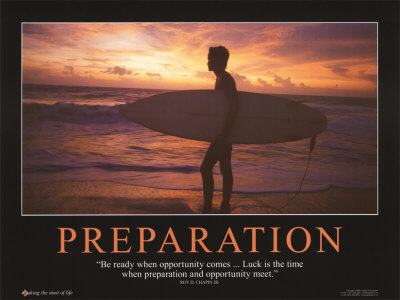
Failure to prepare, is preparing to fail
If at all possible, spend the weeks leading up to your shoot preparing all your shooting and sound settings.
Unfortunately we didn't have the opportunity to shoot underwater in similar surroundings before getting to Fiji so the early underwater footage does not match with the stuff we shot when we got our settings sorted but thankfully this is not too big an issue as we sorted our glitch with plenty of time to spare.
When shooting topside, I wholeheartedly recommend setting your Canon DSLR to the downloadable Cinestyle setting. You remember I mentioned shooting to suit the edit? Well this is absolutely ideal for that. It is apparent when shooting that the image you see looks very flat, lifeless and desaturated, however, this setting allows complete flexibility in post production. Your camera records the colours but doesn't present them allowing you to boost, desaturate, change and basically, create a whole new palette for each scene. For the promo trailer I screened at BiteBack the strength of this setting became apparent as it was a joy to work with the footage at colour correction and grading stage, if you've seen it, you will appreciate how vibrant it looks, believe me, the raw footage looks nothing like that!
However, DO NOT use this setting underwater, it sucks! Use a red filter along with which ever preset you like the look of, white balance and use lights if the situation needs them.
Also don't use Auto ISO, that is unless you enjoy denoising and having the sky change colour every two seconds. I never like to go above 800, 200 is my automatic choice, 800 at a push in real low light. Use the aperture, specific lenses and lights to get the light you need, don't crank the ISO, you'll just saturate the shots with horrible noise which needs removing and takes forever to render in post production.
Also, match your cameras before every scene, you don't want to be doing that in post because, well, it's a complete ballache that takes ages when you could solve the problem by spending two minutes matching when you're preparing your shot.
Shoot B-Roll and lots of it!
B-Roll if you' don't already know, is when you shoot cutaways, like scenery, people,animals, weather etc and is used to join shots together. Long shots of the same thing are boring to look at and having a ton of B-Roll gives you options to cut scenes together using only the best bits and allow your scenes to flow better. It is also a great way to edit down interviews and cut out any bits which aren't relevant to what you are trying to show, things like long pauses and extraneous information.
Try to avoid using photographs unless they are necessary as well because unless you have taken them yourself or you have permission to use them, you will encounter licensing issues and perhaps more importantly, videos of photos and long segments of text are really, really, really, really boring. I see them all the time and I never last longer than thirty seconds before I have to turn them off!
Protect your footage
Your footage is your asset for the film, without it, you don't have a film. Imagine you get the backing to go shoot your film, you get halfway or even worse, all the way through and you have a technical issue, a theft, water damage or anything else which damages your equipment and you lose your footage, what do you do now?!! The answer is most likely nothing because there is nothing you can do!
Every single day in Fiji, I would have my evening meal and then return to my villa to download and log every single shot from every single card for that day. This would occasionally be up to 100GB of video and my god was it boring. The footage would be downloaded onto an external hard drive and when the footage was all finally, safely, downloaded, I would log the file name for every single clip and a short description of what it was.
This was never the intended plan, the original plan was that we would all download our own footage which would then be duplicated on to the master hard drive but whereas I run a Windows 7 laptop, Hamish and Hugh both run Macs and the hard drives were formatted differently so whilst everyone else could relax in the evening with a few beers and good company, I would be holed up in my room logging footage I couldn't watch properly because it was unencoded and this usually took around four to five hours every night until about 1am.
It wasn't much fun but it was absolutely necessary because now I am back, I don't have to go through almost 3TB of footage in one go which would be, quite frankly, hell.
All the footage was saved on each shooter's individual hard drive, was saved all together on one master hard drive and this was then duplicated to another. It would have taken one hell of a catastrophe to lose the footage.
What's your story?
I knew I couldn't just go and interview people about a story which has already happened and continues to progress, sure it would interest me but most people who will be watching your film will want to see something more. People enjoy watching other people doing things or experiencing scenarios which are unusual, different and one of the most important elements in any engaging story is jeopardy, the will he/won't he stuff, the things which make the protagonist uncomfortable or put him at risk, that's what people want to see. These are things which just happen, things you normally can't script so it's important you are open to putting yourself in situations whereby you can allow your story to develop.
Look at Sharkwater as an example. It's a film I personally like, it's beautifully shot and has done a lot of good for shark conservation, I imagine you could look at the people you know personally or even more so, the groups on Facebook who are talking about shark conservation, I would wager most of them appeared post-sharkwater, it has certainly mobilised increased activity amongst the man on the street in regards to shark conservation. The interesting thing to me is that it's perceived to be a film about sharks when in actuality it isn't, it's a film about Rob Stewart.
Which bits of the film stand out that you remember? Rob and the Sea Shepherd crew being chased by the police, Rob getting Dengue Fever, Rob filming the shark fin processing plant, Rob returning to Costa Rica to find that the locals are marching in favour of shark protection. None of these things actually have anything to do with sharks, they are about people and that is why the film was so successful, the sharks are merely supporting players in a film about people, had the film had none of the above and just been about sharks, it most likely wouldn't have had anywhere near the impact it did, Rob is an engaging storyteller who constructed a story to deliver an important message and it worked very well, a great many of the people now interested in the conservation of sharks were most likely drawn to it not by the sharks, but by Rob Stewart and he must be commended for that.
Watch it again, in fact, watch any film which is similar to Sharkwater, every scene in which the protagonist appears has been carefully crafted to illustrate the hero as exactly that, a hero. It sounds cynical but that's just the way it is, can you think of any film that doesn't have a hero and a villain? An audience needs to be engaged and the best way to do that is to give them someone to root for and/or someone to rail against. You don't have to wear a cape and shoot laser beams out of your eyes, you just have to have something to which your audience can relate, you want them to want to be there with you.
The edit
Now you've returned from your shoot, you have to put it all together into an entertaining final end product. You might be handing your footage over to an editor but if you're like me and you're editing it yourself, you need to bear a few things in mind.
What are you using to edit your footage? I'm still in the process of trying to put together my post production budget which will give me access to the resources I need to get what I want a lot more easily and a lot quicker, until then I will be editing on my laptop.
This is by no means ideal but I have the software to create a professional broadcast standard film, it's just the laptop that's the problem as although you can do it on a decent system, it takes infinitely longer than with something a lot more powerful.
I use the Adobe CS4 master Collection suite and I love it. The edit is done in Premiere Pro, the effects in After Effects and the colour correction with Synthetic Aperture Colour Finesse 3 LE (amazing) and the grading with Video Copilot's Film magic Pro and Magic Bullet's Mojo.
How long is your film going to be? What music will you use? Both of these are hugely important as you need to bear the length of the film in mind right from the start so you don't get carried away, it also teaches you the importance of being brutal with your edit. The music will set the tone of your film as well. Forget about using songs by all your favourite artists unless you have squillions of pounds to pay for the licensing, so that means you either do it yourself, or you enlist the help of others to do it for you but make sure you have a written agreement in place beforehand.
Don't fall into the trap of using too much of a shot just because you like it, don't let text last too long on screen either, I saw a video the other day (ten minutes of photographs and text and nothing else *shudder*) and there was one text caption that had only three words and lasted for almost twenty-five seconds. Needless to say, I didn't watch the rest. The text font was also horrifically bad, avoid using funky fonts unless they are called for, stay simple, readable and small, it looks far more professional.
So that's it, I have undoubtedly missed things out so if you have any questions, please feel free to shout them out to me and I guarantee you'll get an answer.
Things are going very, very well at the moment, bizarrely, am now being approached by people within the television industry who are showing some good interest so you never know, i may just get this on your telly after all! Stay positive, believe in yourself and follow your heart. If you are embarking on your own adventure, get in touch, I'd love to hear all about it!
Just a quick blog to say the first video diary is up. As promised, I wanted to let you know the kind of gear we are shooting with out here and it also includes some nice sharky footage at the end which shot a few days ago. It's straight outta the camera so no processing on it but hey, check out all those Bull Sharks!!!
I'm gonna do a blog soon about how this is all affecting me and me feelings at actually being here but today, I'm sick unfortunately so will wait until I'm better to hopefully do it justice.
Incidentally, having missed the dives today due to aforementioned sickness, Mike and Chris, a really nice guy out here on a project called Broadreach, informed me they had one of the Tigers turn up not once, but twice! Damn! However, I am hopeful she'll be back to say hello to me soon.
I've been a busy boy of late, hence the lack of a blog for a month, which is of course, unacceptable, please accept my humblest apologies!
The frustrating thing is that I'd love to tell you all what I'm doing however at this stage I am unable to do so for a couple of reasons but fear not, you will hear all about it in the next week or so! Things are really starting to go in the right direction and my decision to quit the rat race and go for my lifelong ambition is looking more and more like the best and bizarrely, most sensible thing I have ever done.
Life is pretty good right now, yes it's still tough, I'm still skint, my stuff is spread out in different houses around the country and there is still a lot of uncertainty as to what the future holds but believe me, I have never been as happy and satisfied with my day to day life as I am right now. It's all relative I guess, different people measure success using different parameters, if financial gain is the yardstick of success then I still have a hell of a way to go but I don't see financial gain as a measure of "success," to me the ultimate definition of success is setting ones' self goals and achieving those goals whilst enjoying the process of doing so and in that regard I'm flying at the moment!
Rewind ten months to July 1st 2010, waking up that Thursday morning in the knowledge that I was at square one with nothing but an absurd belief that I could actually make the things I had dreamed about for over twenty years actually happen was both exciting and terrifying. When I say to people that I had nothing, despite the fact as time goes by people may cast an accusatory glance in my direction, claiming slight exaggeration, I can guarantee I had nothing, no family ties to the industry, no confirmation of any help, financial or otherwise, no plan of action and barely enough money to get me through the next six weeks. The only thing I had was an idea I believed in, and my friend Hamish giving me the encouragement when I needed it.
Now, in mid April 2011 I am on the brink of some amazing things which I have achieved pretty much single-handedly with nothing to rely upon other than the stubborn belief that if you want it enough and work hard enough at it, you can achieve. I say "single-handedly," i have had the support of some amazing people but I'll come to that in a minute. Somebody said an interesting thing to me last year, I was at the Dive Show in Birmingham discussing "From the Office to the Ocean" with one of the people who has shown support from the very beginning when they said "the reason you're gonna make this happen is because you have this naive belief that anything is possible and you won't let people tell you otherwise." The use of the word "naive" wasn't derogatory by any means, it was merely a statement that backs up everything I have said from the beginning. We are told by society that we must fit a certain mould, get a job with a regular income, pay your taxes, don't complain too much, raise some kids in the right way and when you retire (if you live that long) hope that they will look after you before putting you in a home to die. Well that's not the way I intend to live my life.
It's considered "naive" to believe that you or I, ordinary people, can step outside of that and say "no, I'm going to do things my way, it's my life and I'll make my own rules." Because of that I am now on the brink of something which is pretty much unheard of or at least extremely rare, breaking in to an industry without the benefit of a famous surname and doing it on my own terms, they have come to me, not the other way around.
I am in regular contact with a major production and distribution company with a serious pedigree, an OSCAR nominated pedigree no less, who are both enthusiastic and extremely interested in helping me move forward. Their approach is outstanding, supportive and creative and because of that I look forward to working with them moving forward. There is a long way to go yet but it's all going in the right direction, people almost always say the same thing to me, "if it doesn't work, at least you can say you tried." They are almost always surprised when I reply that that would almost be as bad, if not worse than not trying at all. To go for it and fail is to say that everything you have believed in for years is fake and that you are destined for the life that society thrusts upon you. Failure is not an option, obstacles are there to be overcome so you can then view what once was an obstacle as a success, you pick up and carry on making all the other obstacles into successes along the way, it sounds simple but every problem has a solution, find the solution and it's not a problem anymore, predict the obstacles and arm yourself with the weapons to defeat each and every one.
Which brings me on to my next point. I said above that I have done this alone, relying solely on myself to make it happen which to a major extent is true however, through the effort and work I have put in I have been fortunate enough to become involved with so seriously amazing and supportive people. Hamish started this by opening the door for me with the guys at Cameras Underwater who have been amazing to me. Shortly after and with the help of Dave Glanfield I managed to speak with the guys at Canon and became incredibly fortunate to be associated with them and both Alan and Dave have been superb throughout.
There are a number of people and organisations who have supported me on this journey and who continue to do so, one of those, Fourth Element, one of the first companies I approached in 2008, have been brilliant in providing help when I needed it, some excellent advice and now, a box full of awesome Fourth Element gear which I received on Saturday. Fourth Element not only make some of the best and easily the coolest looking dive gear and apparel out there, they are also big supporters of shark conservation who donate money from T-Shirt sales to the Shark Trust. Their ethos is outstanding and not only will I be toasty and warm in whatever ocean I am in, I will also look good in and out of the water which, let's face it, is pretty important in my line of work!
The list of organisations and people backing me is now pretty huge and throughout this whole process I've learned an important and humbling lesson. People are actually pretty bloody decent. It's easy to view large organisations as faceless entities trying to extract every last penny out of you but in many of these organisations are enthusiastic, energetic, creative and cool people who are only too happy to help something they too believe in. Without the help of these companies and individuals I would not be where I am now so to them I extend my humblest and sincerest thanks and guarantee that your support will not go unrewarded, nor will it ever be taken for granted. I am exceptionally proud to be associated with all of you.
I could do a blog thanking everyone who has helped so far but it would be huge and for you, the reader, a bit boring so the thank yous will be made in context over the course of various blogs so with that in mind, keep an eye out over the coming weeks, there are some major announcements and also some creative content of interest which I hope, you find almost as exciting as I do! In the next week or so, my inactivity in here will be explained in full and it's something I can't wait to clarify and publicise so thanks for your patience and strap yourselves in because things are about to get interesting ;)
On Tuesday, I was exceptionally lucky to be able to film some underwater segments of a dream type sequence for the film, at an underwater stage with the brilliant Hugh Fairs.
An early, 8am start meant that I was up and about at 5am which hasn't happened for a very long time! When I'm away on diving trips in wonderful, exciting foreign lands, these types of pre-dawn starts are pretty much the norm but when the cold, wind and rain is what awaits you, it's a lot harder to muster the enthusiasm to alight from a comfy, warm bed! In this instance, the prospect of actually getting some film "in the can" was all the encouragement I needed and from the second Megadeth startled me out of my slumber, I was buzzing with excitement about the day ahead.
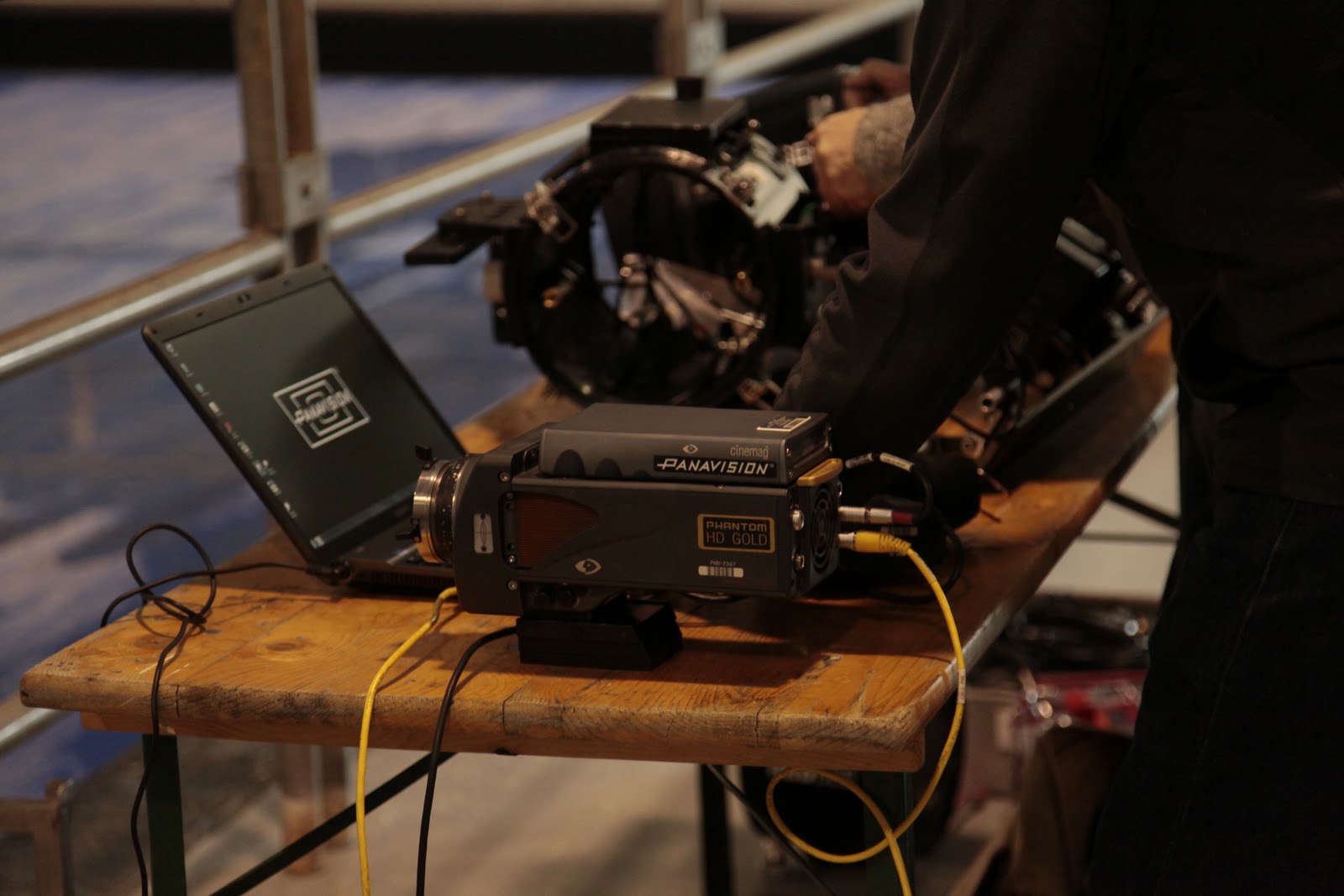
My good friend and talented film-maker, Liam from Banter Media was helping me document the day on both film and photos so when he arrived at 6am, I was more than a little relieved that he too had managed the early morning start. The drive itself was a doddle and we arrived pretty much dead on time to find Hugh already starting the arduous task of setting up the camera he was using for the day, "The Phantom."
Hugh was there to do some aerodynamic testing on the housing he designed for use with this camera for a filming job he has coming up. The biggest benefit of this camera is the enormous frame rate at which it shoots, meaning slow motion looks phenomenal, think of the BBC footage of the Great White's breaching at Dyer Island that was featured in the Blue Planet, that sort of stuff. It doesn't come cheap though, £100,000 at last valuation! As he was there doing a testing session, I was able to help him out and also get some footage filmed so the opportunity to kill two birds with one stone was too good to pass up.
The concept behind the segment I was shooting is really, pretty simple, an underwater sequence but dressed in your typical office wear, it might not make a huge amount of sense now but you'll have to wait and see the finished result when it definitely will! This meant jumping into the tank several times, with weighted ankles and getting various angles of these jumps, plus a couple of longer, underwater swimming shots.
One of the most exciting parts of the whole process was watching the footage back, it really did look absolutely stunning and actually being able to direct the action and get the images in my head onto a screen was a hugely fulfilling experience and what was actually a long day flew by in no time. If this is what the film-making process is really like, sign me up right now! I have to give a huge amount of thanks to Hugh, Neil, Lawrence and Liam for their help and I am delighted with how it all went.
The rather crudely edited video at the top of the page is a bit of behind the scenes footage from the day, shot on my Canon 7D as my outdoor, maneuverable filming rig is now almost complete. There's a bit of work to be done on it yet but it's all looking good. The footage was captured using a Canon 15-85mm lens with a UV filter and the camera settings set to completely flat, as per the recommendations of none other than the incredible Phillip Bloom.
With regards to progress, things are going very well, I met with Canon again on Monday at the Focus on Imaging show at the NEC in Birmingham, to discuss a number of exciting propositions moving forward. I have also been in discussions with a Salford based company called Future Artists, who specialise in the production, distribution and marketing of film and television across a wide section of media platforms. Their last documentary was the Oscar nominated "Restrepo" and feedback so far about "From the Office to the Ocean" has been nothing short of exceptional. Keep an eye out for progress on that front!
For all you facebook fiends out there, I have made a new, more manageable group which allows me to keep in contact with you all on there in a much more efficient manner so if you haven't already, join up here, simply click "like" and hey presto, you're sorted!
There are some incredibly exciting things in the pipeline at the moment which I'm working on that could have a hugely positive effect on localised shark conservation efforts, at this stage, I have to keep them under my hat for various reasons but rest assured, you will know about them as soon as I am able.
Finally, well done to Guam for passing it's legislation regarding shark conservation, it seems as the weeks go by, more and more nations are making efforts to help the world's declining shark populations. Of course, we are still a million miles away from where we need to be but every step is a step in the right direction.
I hope you are all well, as always, please feel free to get in touch with any comments, questions and suggestions, I love hearing from you all.